
Winter Pool Care on the Gold Coast: The Complete Guide
Winter is the easiest season to own a pool on the Gold Coast. It is also the season when expensive problems quietly begin.
Every spring, our technicians recover pools that looked perfectly fine through winter. Clear in July; green by October, with a scaled salt cell and a pump that had been whispering a warning since June. Almost all of it preventable — with about ten minutes of attention a week.
Why Winter Matters More Than You Think
Gold Coast winters are mild — that's precisely the problem. Pool water sits between 16 and 20 degrees through winter: algae slows, but it never stops. Meanwhile rain quietly dilutes salt and stabiliser, the westerlies load the pool with phosphate-rich leaf litter, and small equipment faults run unheard because nobody is standing near the pump.
A neglected summer pool tells you within a week — it goes green. A neglected winter pool says nothing for three months, then presents you with a repair bill.
The Winter Routine — Ten Minutes a Week
Run the pump 4 hours a day
Turn the water over once a day: around 4 daylight hours in winter, against 6–8 in summer. Cut back — never off. Still water can't be sanitised or filtered. Variable-speed pumps do better running longer at low speed, and daytime running suits solar households.
Turn the chlorinator down, not off
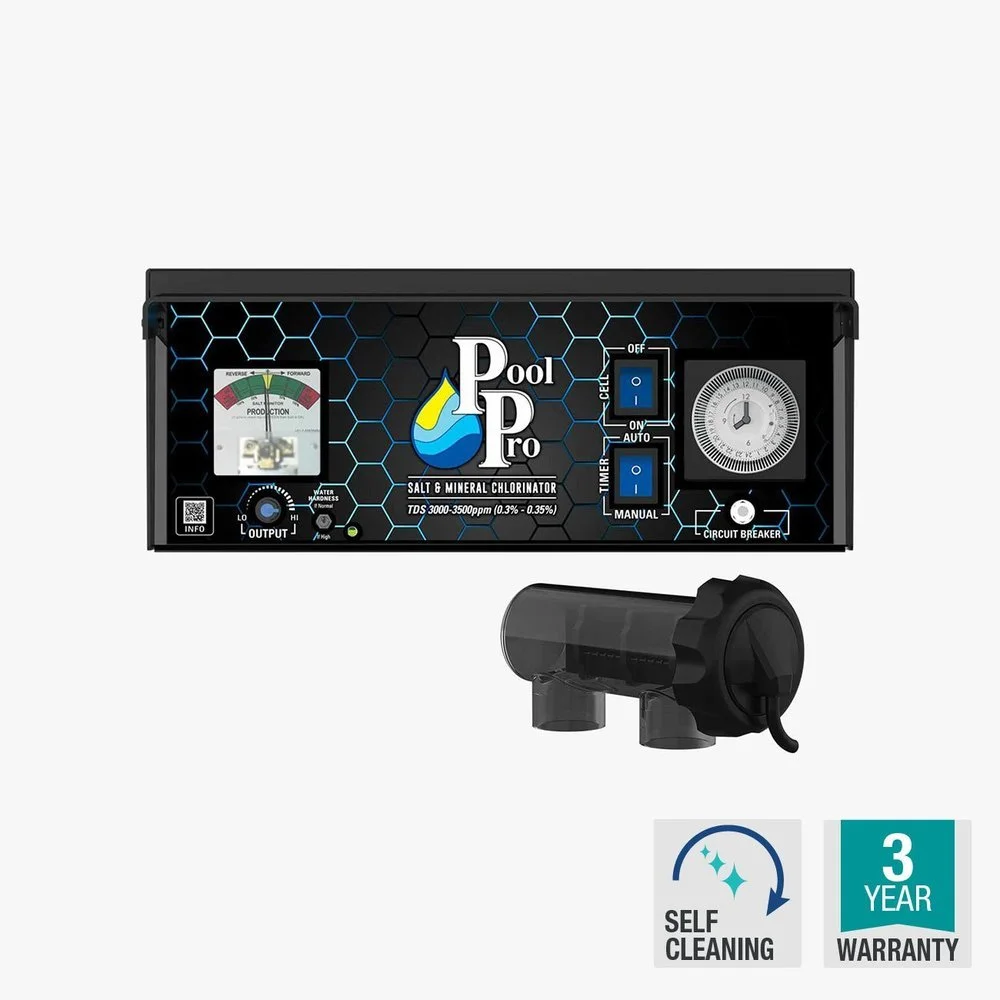
Below about 18°C the cell produces chlorine less efficiently, and many units cut out in cold water on their own — so switching off entirely often means no sanitiser at all, while summer output in cold water scales the cell. Around half your summer setting suits most pools. While you're there, look at the cell: white crusty deposits are calcium scale, and a cell left scaled through winter rarely sees summer.
Hold the same chemistry targets
pH 7.2–7.6 • free chlorine 1.5–3 ppm • alkalinity 80–120 • stabiliser 30–50 • calcium 200–300
Test at home fortnightly with strips, and have the water professionally tested every four to six weeks — home kits don't measure stabiliser, calcium or phosphates, and that's exactly where winter damage hides.
Baskets weekly — and two minutes at the equipment pad
Empty the skimmer and pump baskets weekly and scoop leaves before they sink: leaf litter feeds phosphates, and phosphates feed algae. Then stand at the equipment pad. A healthy pump hums — grinding or a rising whine means bearings, weeks before failure. Drips at the unions are a $30 seal now or a $700 pump later. Note your filter's normal pressure and act when it creeps.
Clear Water Isn't Healthy Water
The failures we repair in spring never announce themselves. Scale inside a salt cell, stabiliser washed out by rain, phosphates building from leaf litter — all invisible from the pool deck. The pools we rescue every September were clear all winter. That's why we test water rather than look at it.
Use August to Get Ahead of Spring
Every September the first warm week arrives and the phones run hot with green pool calls — all at once. Get a professional water test in August and fix what it flags while the water is cold and forgiving. Correcting chemistry in 17-degree water is cheap and easy. Correcting an algae bloom in 24-degree water is neither.
Bring Us a Sample — the Water Test Is Free
A clean bottle filled from elbow depth is all we need. We'll run the full analysis while you wait — pH, chlorine, salt or magnesium, calcium hardness, alkalinity and stabiliser — and tell you exactly what your pool needs. And what it doesn't.
No appointment. No obligation.
Rather Not Think About Any of This?
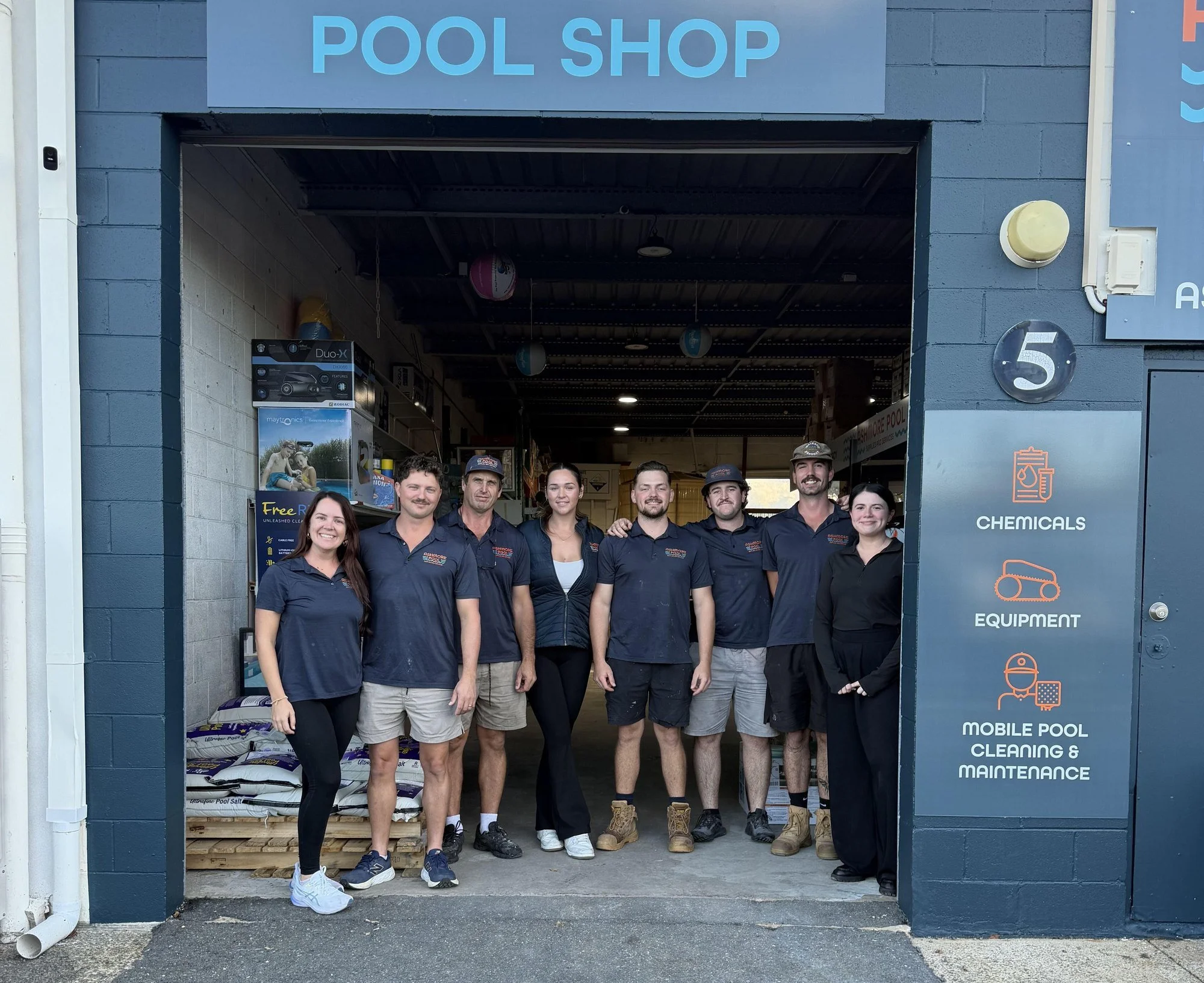
That's what Ashmore Pools Membership is for — scheduled professional care where our technicians manage the chemistry, the equipment and the seasonal changes, year round. Ask us about it when you're in for your water test.
Frequently Asked Questions
How long should I run my pool pump in winter on the Gold Coast?
Around 4 daylight hours a day suits most residential pools here. Variable-speed pumps: longer and slower.
Can I switch my pool off completely for winter?
No — Gold Coast water stays warm enough for algae year-round, and still water can't be sanitised or filtered.
Does my pool still need chlorine in winter?
Yes — the same 1.5–3 ppm as summer. Demand is lower, so your chlorinator works less to hold it.
How often should I test pool water in winter?
Fortnightly at home, professionally every four to six weeks.
